Barlavento


Sotavento


Cape Verde is a land rich in cultural traditions, celebrations, and rituals that reflect the fusion of African and European influences. Each island in the archipelago has its own customs, but some festivals and events are shared and deeply felt throughout the country.
The Cape Verdean Carnival is one of the most spectacular celebrations, particularly popular on the islands of São Vicente and São Nicolau. Strongly inspired by the Portuguese and Brazilian carnivals, it involves the entire population in an explosion of color, music, and dance.
Festivities begin in January or February with the traditional Mandinga parades, where groups of people painted black march through the streets shouting "Oli mendinga teb panhób!". This is followed by processions featuring schools, teachers, and children, leading up to the grand competition between the four official Carnival groups: Vindos de Oriente, Monte Sossêgo (Montsû), Flores do Mindelo, and Cruzeiros do Norte, along with the nighttime group Samba Tropical.
The festival reaches its peak with the awarding of the best float, the Carnival queen, the best music, and the best group on Ash Wednesday.
An ancient tradition related to the birth of a child. On the seventh day after birth, relatives and friends gather at the parents' home to sing ritual songs and play music, aiming to protect the newborn’s soul and ward off evil spirits.
Celebrated on the island of Fogo between April 25 and May 1, the Festa de São Filipe commemorates the discovery of the flag of Saint Philip. The event includes horse races, ancient agricultural rituals such as corn threshing for the preparation of xérem and cachupa, as well as solemn processions and religious ceremonies at the Church of São Filipe.
Batuque is a traditional Cape Verdean musical form, characterized by a repetitive rhythm created by beating hands on cushions filled with sand. The singing is often accompanied by a sensual dance, where hip movements play a central role. This artistic expression has African origins and remains one of the most authentic manifestations of Cape Verdean Creole culture.
New Year's Eve is celebrated with great enthusiasm, especially in São Vicente, where spectacular fireworks displays and island-wide parties mark the occasion. Children walk through the streets singing and wishing a happy new year to residents, keeping alive a tradition of joy and sharing.
July 5 is a historic date for Cape Verde: Independence Day. In 1975, the archipelago gained independence from Portugal, ending centuries of colonial rule. Each year, on this day, the country comes together in patriotic celebrations, cultural events, and official commemorations.
Cape Verde has experienced steady economic growth in recent years, with an estimated GDP of $2.7 billion in 2023 and a per capita GDP of $4,502. The country’s economy is dominated by the services sector (75% of GDP), while agriculture (8%) and industry (17%) play smaller roles.
Despite economic progress, approximately 31.1% of the population still lives in poverty, an increase from 26% in 2019, partly due to the impact of the COVID-19 pandemic. The unemployment rate also remains high (14.5% in 2022). However, projections indicate economic growth of 5.2% in 2024 and 5.4% in 2025, driven by the expansion of agriculture, the energy sector, the digital economy, and increased private consumption.
Fishing remains a crucial resource, with abundant reserves of tuna, lobsters, and blue marlin. Agriculture, however, is limited by water scarcity, focusing on crops such as corn, beans, coffee, sugarcane, and peanuts. To address the lack of water resources, innovative technologies are being implemented, including drip irrigation, water recycling, and humidity condensation systems.
Tourism is the main driver of Cape Verde's economic growth. In 2022, the sector reached 90% of pre-pandemic levels from 2019, and by 2023, it surpassed those figures, demonstrating a strong recovery.
Cape Verde serves as a strategic hub for maritime and air traffic in the Atlantic. Porto Grande in Mindelo (São Vicente) has undergone significant expansions, while the international airports of Amílcar Cabral (Sal), Francisco Mendes (Santiago), and Aristides Pereira (Boa Vista, inaugurated in 2007) have improved the country's connectivity. In 2009, the Cesária Évora Airport was also opened in São Vicente.
Since 1983, Mindelo has hosted major ship maintenance and repair centers. The main commercial ports are located in Mindelo, Praia, and Porto Grande, while smaller islands also have port infrastructure. The road network consists of 3,050 km of roads, of which 1,010 km are paved, primarily with cobblestone.
✅ International aid flows
✅ Support and investments in tourism
✅ Remittances from emigrants
✅ Collaborations with neighboring African countries
✅ Government development programs
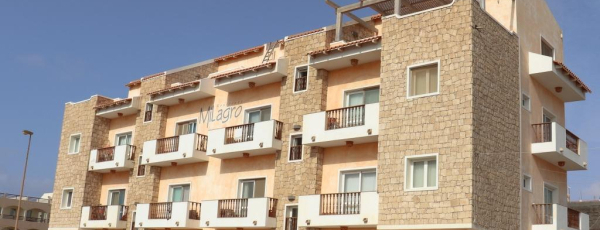
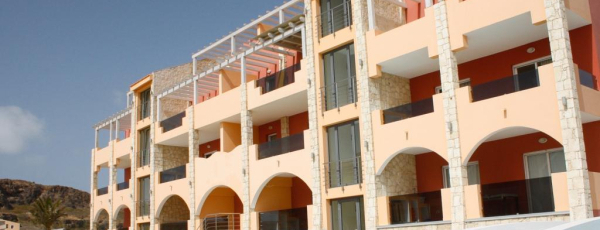
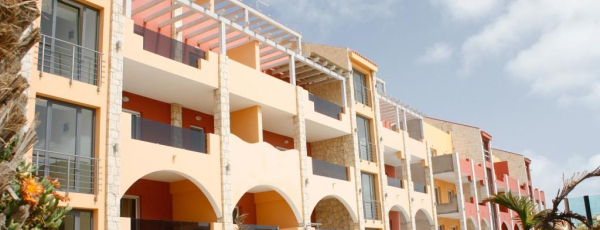
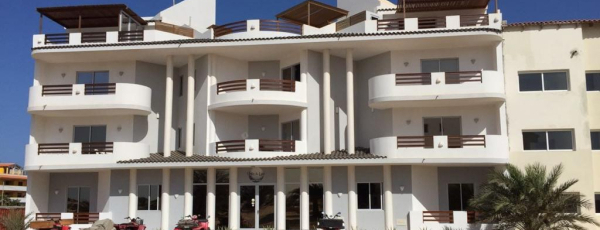
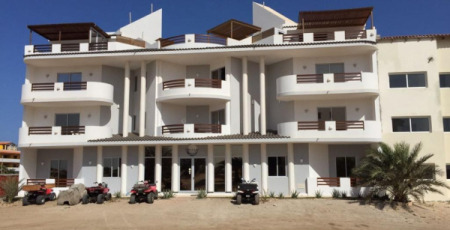
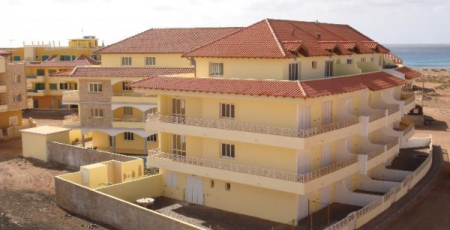
In recent years, the tourism sector has expanded significantly, with the construction of large resorts, particularly on the islands of Boa Vista (8,522 beds) and Sal (14,999 beds).
Currently, Cape Verde has four international airports (São Vicente, Sal, Boa Vista, and Santiago) and three domestic airports (São Nicolau, Maio, and Fogo), while the airports of Santo Antão and Brava remain inactive.
In 2012, for the first time, the number of tourists exceeded the resident population, and in 2023, the tourism sector reached record levels, further consolidating tourism as a central pillar of Cape Verde’s economy.
Music represents the soul of Cape Verde, a land where sounds and rhythms tell stories of passion, nostalgia, and identity. Influenced by African, Portuguese, Caribbean, and Brazilian traditions, Cape Verdean music is a vibrant universe in which each genre has its own history and social function.
From birth, Cape Verdeans grow up immersed in music, which becomes an inseparable companion in their daily lives. Traditional instruments include the solo violin, guitars, the accordion, and the cavaquinho, a small guitar typical of the archipelago. However, many sounds are creatively produced, such as clapping hands on pieces of cotton held between the legs.
Morna is Cape Verde’s most famous musical genre, brought to international recognition by the legendary Cesária Évora. With its melancholic melodies and syncopated rhythm, Morna is often compared to Portuguese fado and Brazilian modinha. Born on the island of Boa Vista, it quickly spread to Brava and then São Vicente, becoming a symbol of Cape Verdean national identity. The cavaquinho is one of its most distinctive elements, accompanying lyrics that speak of saudade, love, and longing.
Batuko is an energetic and sensual dance, traditionally performed by women. Characterized by hypnotic rhythms and a call-and-response singing style, Batuko was long opposed by Portuguese colonizers, who feared it could become a symbol of rebellion. Today, this art form is a celebration of freedom and the strength of Cape Verdean women.
Derived from Morna, Coladeira is a more lively and playful rhythm, blending traditional and modern sounds with European and South American influences. It is one of the most popular styles during festivities, thanks to its cheerful and engaging character.
Similar to Batuko, Colasanjon has even more pronounced movements, often accompanied by drums and tambourines. It is mainly played during popular celebrations and village festivals.
Originating from the island of Santiago, Funaná is a powerful and liberating rhythm. Initially a peasant music style, it was played exclusively with the accordion, while the rhythm was marked by scraping a knife against a metal bar. According to some accounts, its name comes from the two musicians, Funa and Nana, who popularized it.
Landum is the traditional rhythm of Cape Verdean weddings. During the celebrations, the bride and groom begin the dance, followed by guests who take turns choosing a partner and courting them with graceful movements.
Unlike the European Mazurka, the Cape Verdean Mazurka has its own distinct character, with a lively rhythm and enchanting melody that captivates both dancers and listeners.
A genre particularly popular among young people, Passada is considered a variation of African Zouk. Many Cape Verdean artists continuously produce new songs in this style, often played in local nightclubs that stay open until dawn.
Similar to the European Waltz, the Cape Verdean Valsa is one of the oldest musical genres in the archipelago. It is still danced at traditional celebrations, and its most famous interpreter is Cesária Évora.
Beyond Cesária Évora, considered the queen of Morna, several Cape Verdean artists have achieved international recognition. Among them are:
Cape Verdean culture is not only expressed through music but also through literature, which has developed in both variants of the Creole language over the years.
Some of the most renowned Cape Verdean writers and poets include:
These authors have passionately and profoundly portrayed Cape Verdean traditions, struggles, and emotions, helping to spread the archipelago’s culture across the world.
Cape Verde is an archipelago that gained independence in 1975, adopting a parliamentary republic based on democratic principles. In the early years after independence, from 1975 to 1991, the country followed a communist/socialist political model, before transitioning into a multiparty democracy.
Despite economic challenges, including widespread poverty and high unemployment rates, Cape Verde stands out for its political and social stability. The country has never experienced significant political tension, and elections have always been conducted democratically and smoothly.
Over the years, there has been ongoing debate about Cape Verde potentially joining the European Union, a proposal primarily supported in Portugal. The archipelago is seen as a link between Africa, Europe, and Latin America, due to its cultural and ethnic heritage.
From an economic standpoint, Cape Verde has pegged its currency to the euro, ensuring greater financial stability. Additionally, it has rejected membership in two proposed African single currency projects, the Eco and the Afro, reaffirming its alignment with European economic policies.